1. Generate and conceptualize artistic ideas and work.
A. Play & Ideation
Engage collaboratively in exploration and imaginative play with materials
B. Investigation
Use observation and investigation in preparation for making a work of art.
Welcome to the Sculpture Studio!
This week we are learning about working in the sculpture studio, using construction paper!
Materials Needed:
Colored construction paper
Scissors
Glue (bottle)
First Grade Sculpture Lesson
Second Grade Sculpture Lesson
Third Grade Sculpture Lesson
Marisol Escobar, otherwise known simply as Marisol, was a Venezuelan-American sculptor born in Paris, who lived and worked in New York City.
Marisol created wooden sculptures out of rectangular pieces of wood and wooden boxes.
"...it is my goal as an artist to create works that expose injustice and reveal beauty. the rainbow is literally a spectrum of color while...a symbol of hope and promise." — Betye Saar
Alfredo and Isabel Aquilizan explore the idea of moving, community and memory in their cities and structures made of cardboard
Other artists who work with boxes
Mark Dion is a contemporary artist who explores our curiosity. A shed packed with hundreds of small boxes, containers, and tins – each filled with old trinkets, toys, debris, or dried plants. Few visitors know that you can enter and open any box (do it!) You are invited in and are welcome to take out the boxes and look inside.
Memory boxes can be all shapes and sizes. Objects inside bring about the senses of sight, touch, smell or sound will evoke some of the strongest memories.
Each box has an object or several objects that are waiting for discovery.
Artist Ibrahim Mahama transforms materials and found objects to explore themes.
Ibrahim lives and works in Ghana.
As you watch this clip:
What were the boxes in this artwork originally used for?
What doe Ibrahim compare the boxes to?
Ibrahim creates walls and installations constructed in common materials. He often works with found objects, transforming them and giving them new meaning.
1. Generate and conceptualize artistic ideas and work.
A. Play & Ideation
Engage collaboratively in exploration and imaginative play with materials
B. Investigation
Use observation and investigation in preparation for making a work of art.
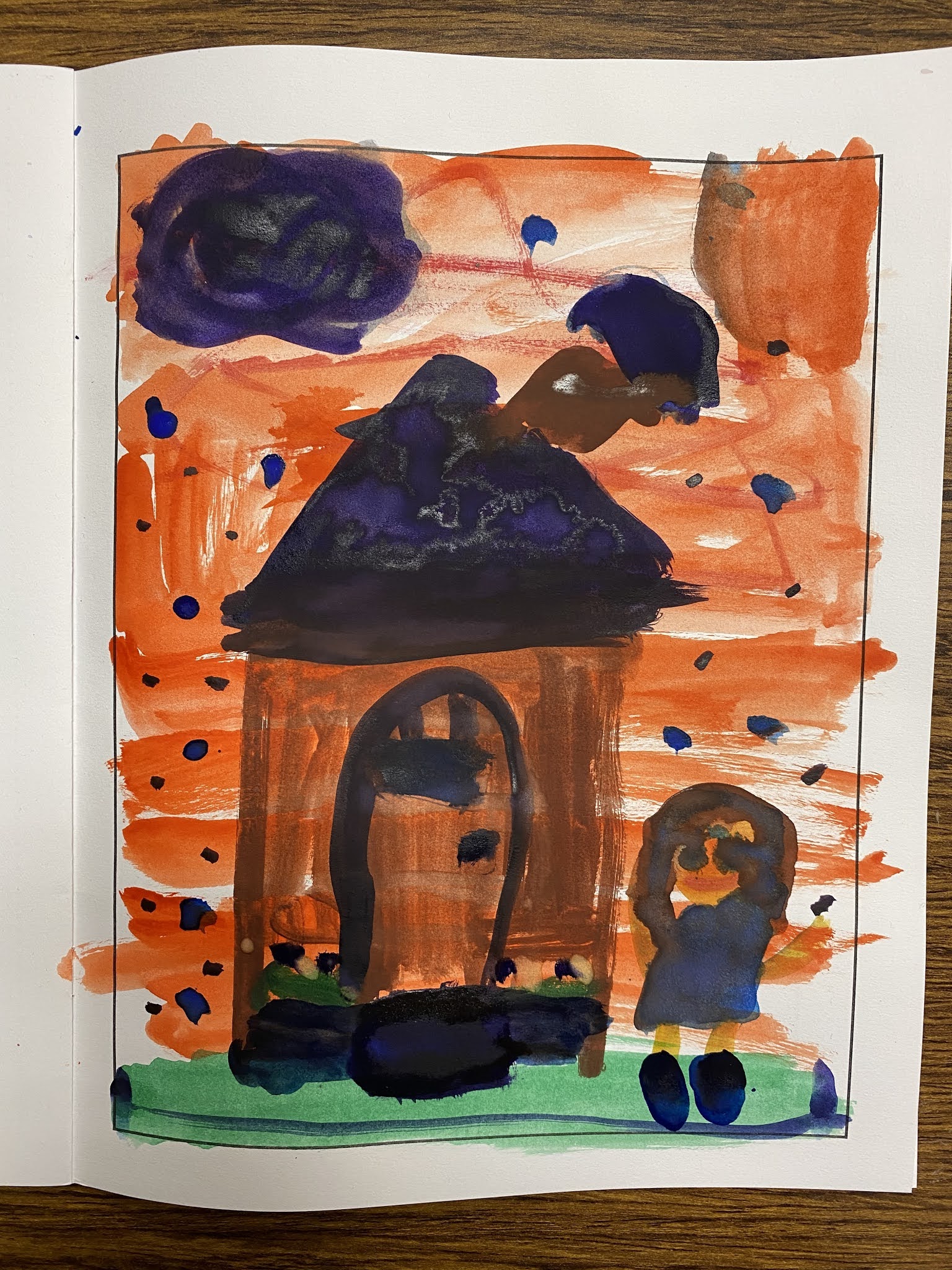
Welcome to the Painting Studio!
This week we are learning about working in the painting studio.
We are going to learn studio procedures for set up and clean-up, look at some paintings by master artists, learn how to care for the materials in the painting studio, and explore painting with watercolor paint.
We will complete the skills we learn in our Studio Practice books.
(If you don't have a studio practice book, you can complete the lesson using 2 pieces of white paper)
1. Generate and conceptualize artistic ideas and work.
A. Play & Ideation
Engage collaboratively in exploration and imaginative play with materials
B. Investigation
Use observation and investigation in preparation for making a work of art.
This week we are experimenting with drawing materials. We will show what we know using pencils, crayons and markers. This practice will prepare us for our work in the drawing studio!
With a pencil... You can create light and dark values. Value is the lightness or darkness of a color. You can create light and dark values by changing how hard you press on your pencil.
Blending and Layering: Making new colors in the drawing Studio You can layer crayon by coloring one color over another lightly.
Video for 3rd Grade
Ask yourself these questions: 1. How did you use your pencil? Did you press light or hard? 2. Did you layer crayons? Where? If you didn't, add one color on top of another to create layers. 3. Did you use the tip or the side of the markers?
Congratulations! You are now ready to use the drawing studio!
If you finish your book you can try out these other supplies and techniques
1. Generate and conceptualize artistic ideas and work.
A. Play & Ideation
Engage collaboratively in exploration and imaginative play with materials
Welcome to art class! We are going to have an exciting year together in art, full of discovery and art making. We will draw, collage, paint, make sculptures and stitch and sew. We are going to learn what it means to be an artist and how to work like an artist.
Expectations
1. Take care of people
2. Take care of stuff
3. Behave like an artist
How do we take care of people in the art room?
Share the colored pencils with your table mates. If someone is using a color you need say: "may I please use the blue pencil when you are finished?" Then wait patiently.
How do we take care of stuff in the art room?
For example, when we are done with a marker, we should place the cap back
on till it snaps, so that the marker doesn't dry out.
How do we behave like an artist?
Envision
I can think about what I am going to draw, or make a mental picture before I start.
I usually start with an idea even though it may change along the way.
Today we are going to get our Studio Practice Books.
We use our studio practice books to learn skills and classroom routines.
You will create a piece of art using drawing supplies.
Think about what you want to draw.
Close your eyes and try to picture what you want it to look like. When you are ready, you may begin. Take your time drawing in pencil. Draw large enough so you fill the page and you can color it in.
Let's begin our art, and before we leave we will talk about some of the
ways we behaved like an artist.
If you finish your drawing early, try the Get to Know Me Sculpture paper by Cassie Stephens.
Clean-up expectations:
I will always play the clean-up anthem at clean-up time.
Clean-up is silent.
Everyone should finish cleaning up their studio space before the end of
the song.
Today, during clean-up, you will be responsible for putting your supplies in the bin neatly, and putting your book in the box on the supply table.
Reflection:
After the drawings are completed, discuss the ways they behaved like an artist during class:
Include thinking of an idea, working quietly, sharing and taking care of supplies.
Line Up Time.
Practice line-up expectations:
Quiet
Feet on tape
Facing forward
VA: Cr, Anchor Standard 1: Generate and conceptualize artistic ideas and
work